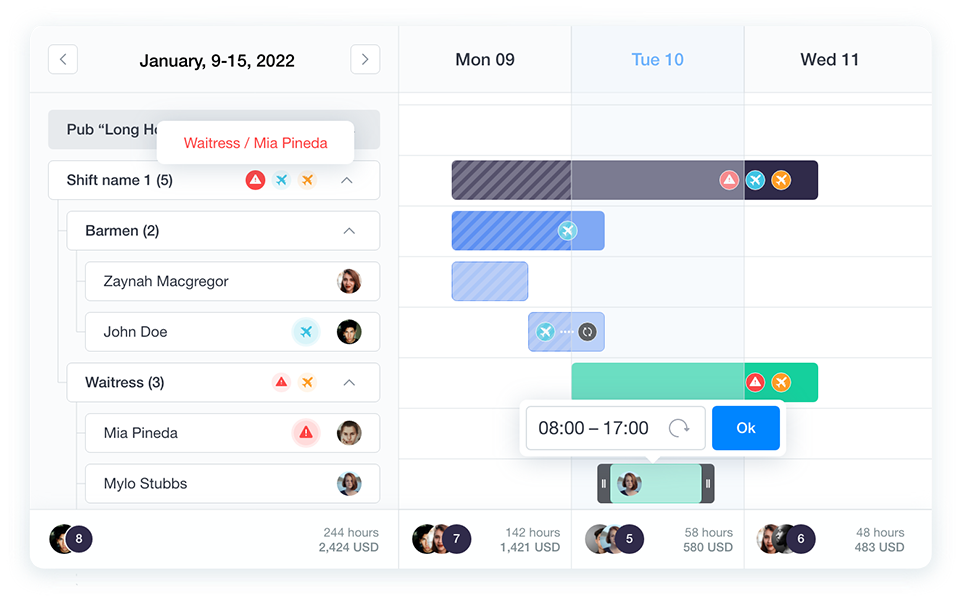
Employee scheduling has a direct impact on labor costs, employee satisfaction, compliance, and daily operations. When shifts are planned manually using spreadsheets, messages, or printed schedules, businesses face recurring problems such as overtime spikes, miscommunication, poor coverage, and burnout.
A digital shift scheduling system replaces manual planning with automated rules, real-time visibility, and employee self-service tools. Below are the 10 biggest benefits of using digital shift scheduling software and why modern companies are moving away from spreadsheets.
Outline of the Article
- What is digital shift scheduling?
- Automated schedule creation
- Faster schedule communication
- Improved employee satisfaction
- Reduced labor costs and overtime
- Built-in labor law compliance
- Smarter forecasting and staffing
- Greater operational flexibility
- Higher productivity across teams
- Improved accountability and transparency
- Better overall business performance
- FAQs
What is a digital shift scheduling system?
A digital shift scheduling system is workforce management software that helps managers create, publish, and manage employee schedules online. Shifts are assigned based on availability, roles, and business rules, while employees can view schedules through web or mobile applications. In practice, digital scheduling is often part of a broader workforce management system that connects schedules, time tracking, and approvals.
1) Automated schedule creation
Digital scheduling systems use reusable templates, drag-and-drop tools, and rule-based logic to generate schedules in minutes instead of hours. Managers no longer need to rebuild schedules every week from scratch.
2) Faster schedule communication
Schedules are published instantly and updated in real time. Employees receive notifications immediately, eliminating confusion caused by outdated paper schedules or group messages.
3) Improved employee satisfaction
Employees can check shifts anytime, submit availability, request time off, and swap shifts digitally. This transparency improves work-life balance and reduces scheduling conflicts.
4) Reduced labor costs and overtime
Digital shift scheduling helps prevent overstaffing, understaffing, and unapproved overtime. Managers can see total scheduled hours before publishing shifts, improving labor cost control. When scheduling is connected with time attendance, you can also compare planned shifts to clock-ins and flag exceptions earlier.
5) Built-in labor law compliance
Scheduling rules help enforce maximum working hours, rest periods, minor labor restrictions, and overtime thresholds, reducing compliance risks and payroll disputes.
6) Smarter forecasting and staffing
Historical scheduling data helps predict peak periods, seasonal demand, and staffing requirements more accurately instead of relying on guesswork. This makes it easier to build realistic shift templates that match demand.
7) Greater operational flexibility
When absences or demand changes occur, schedules can be adjusted instantly and communicated in real time—helping managers avoid last-minute phone calls and coverage gaps.
8) Higher productivity across teams
Automation reduces administrative work for managers and minimizes downtime for employees, allowing teams to focus on operations instead of schedule coordination.
9) Improved accountability and transparency
Digital scheduling provides a clear record of planned shifts, accepted assignments, changes, and (when integrated) actual worked hours—creating a single source of truth for managers, payroll, and employees.
10) Better overall business performance
By improving labor efficiency, communication, compliance, and employee satisfaction, digital shift scheduling systems directly contribute to stronger operational performance and better customer service outcomes.
What to look for in a digital shift scheduling system
- Rule-based scheduling (overtime, rest periods, availability)
- Mobile access for employees and managers
- Shift swap and time-off workflows
- Multi-location and department support
- Integration with time tracking and payroll
- Real-time notifications and alerts
- Clear reporting for planned vs actual hours
Conclusion
Digital shift scheduling systems transform scheduling from an administrative burden into a strategic advantage. Businesses gain visibility, cost control, and scalability while employees benefit from clarity and flexibility.
Explore how Grownu workforce management solutions help organizations automate scheduling, control labor costs, and improve workforce operations.
Frequently Asked Questions
Last updated: January 23, 2026